

Doctors and Patients Want a Spacer They Can Trust.
Modern prostate cancer treatment is effective, but radiation can impact healthy tissue located near the prostate. Barrigel™ rectal spacer helps protect the rectum by reducing the amount of radiation that reaches it during treatment.1
Time Until Barrigel™ Rectal Spacer is featured on The Balancing Act on Lifetime
Well, thanks to things like treatment advances and greater awareness, more men are surviving their prostate cancer diagnosis. But it doesn't end there because so many men undergoing prostate cancer treatment still have to fight for their quality of life and their dignity. The man you're about to meet is a soldier, but he's also a survivor. Hello. My name is Michael Best. I'm seventy one years old. Hello. My name is Jackie Best, and I'm seventy two years old. I joined the army back in April of nineteen seventy four. At the end of nineteen seventy four, I did my first tour of duty in Germany, and I stayed in Germany for the first three years. Came back to States, and I was stationed at, Fort Stewart, Georgia. Oh my goodness. I met Jackie back in nineteen ninety here in Augusta, Georgia as I was going through, military training school. And, I was actually at a party, and it was my birthday. I used to love to dance. That's why I would go to places, you know, the clubs and things like that. Well, I said, maybe I just go back to the barracks. So I got up to leave, and in the back of the room, I'll let my wife tell you the rest of the story. Well, I love to dance. So I asked him to dance, and that's where it started from. We were married in March on my birthday, twenty second of nineteen ninety seven. I'm his birthday gift forever. That's right. And I thank God. And he won't forget it even. That's right. She won't let me. We have fourteen grandchildren and nine great grandchildren. Oh. Oh, yeah. Oh, okay. For the kids who are thirteen. Mhmm. I can do all I was in Liberty University going through for my pastorial counseling, degree for master's. And then that's about the same time that I met doctor Clawson. My name is Zach Clawson. I'm a urologic oncologist at the Georgia Cancer Center in Augusta, Georgia. You know, I think with urology, there's such a personal relationship with patients, and I really got a feel as a medical student that this is the kind of patients that you're gonna see in the clinic. You're gonna maybe take them to the operating room, but you're gonna follow them probably for their entire life. And really, the cancer patients are the ones that I really connect well with. Hey, guys. How are you? Hey. It's good to see you. How are you? Good to see you too. We're getting over your prostate cancer results in the clinic. Okay? Okay. Alright. Go on this way. You know, I never really felt afraid, but it's based on I know what it's based on. It's my faith in God. I can do all things through Christ's strength, isn't it? And that's that's where I felt. Yeah. You know? The biopsy did show some prostate cancer. So I know that's not what anybody wants to hear. Oh, definitely not now. We're gonna talk about options for treatment. You know, as a urologist, prostate cancer is the most common cancer that we treat and, it encompasses a huge portion of our practice whether it's localized all the way to advanced prostate cancer. Localized prostate cancer is the most prevalent or the most common in the United States and across the world. What localized prostate cancer is the disease is confined to the prostate. It hasn't spread to the lymph nodes or the bones or other organs. We've had a tremendous amount of advancements in metastatic prostate cancer in terms of extending not just longevity, but quality of life. When it comes to localized prostate cancer, we have sort of our classic ones that we've had for a long time, surgery or radiation. If we can catch this early and we can treat them, this is the goal is to extend life later on. You know, the goal is to try to avoid advanced prostate cancer. I had an uncle that died from prostate cancer. It's because he never followed up on anything. Because once the cancer gets outside of the prostate, you know, and you get limited. So we know that our two most common treatments for localized prostate cancer are surgery, removal of the prostate, or radiation using radiation beams to treat the prostate cancer in the prostate. And we know with localized treatment options, we're shooting for a cure for these patients, but there's often side effects associated with any treatment that we're gonna do. Taking the prostate out, I didn't like the side effects of that. Radiation does damage to your body, and so you have to what what's best for you. With radiation, those same nerves that affect both incontinence and sexual function are right there in the radiation field as well. So we know that over time, men might may have some sexual dysfunction that deteriorates. They also may have some overactive bladder during and after the radiotherapy as well. And so, the third one with the radiation that we don't see quite as much with surgery but more with radiation is rectal toxicity. When we think about the space between the rectum and the prostate, these organs are very close to each other. About a centimeter. This is a very personal area that we're dealing with. Right? And so when the radiation beams from treatment are hitting the prostate, they're also hitting the rectum as well and that's where we think the rectal toxicity comes from. And rectal toxicity can take many forms. It could be constipation above baseline. It could be diarrhea above baseline. It could be rectal bleeding. We've had a solution for rectal toxicity for a while now and this is the rectal spacers to create space between the prostate and the rectum to basically allow the radiation therapist to be aggressive with their planning and spare the rectum from the radiation therapy. I've been doing rectal spacing since about twenty twenty. And so in twenty twenty two, I learned about Barrigel, and it quickly became my favorite rectal spacer. Barrigel rectal spacer is intended to temporarily position the anterior rectal wall away from the prostate during radiotherapy for prostate cancer. And in creating this space, it is the intent of Barrigel rectal spacer to reduce the radiation dose delivered to the anterior rectum. With the Barrigel rectal spacer, we have the opportunity to try to prevent the rectal toxicity that we know happens with radiotherapy. When we're talking about Barrigel, I really like to discuss this with my patients because this is truly a quality of life procedure. We decided to do radiation with Barrigel. For doctor Klaus, I felt very comfortable because he gave off the aura of someone that was concerned, not just a doctor, you know. And, when I feel that way, there's a sense of calm, of peace. So we decided after many discussions to pillow talk, late night talks and early morning talks and things of that nature, we weighed our options. And I said, well, you know, based on our research as well, they say, yeah. That would be the better way to go. When we do the procedure, it generally takes about ten to fifteen minutes, and this may vary based on everybody set up in the in the clinic or the ASC or the operating room. The barrigel rectal spacer is gonna be inside you until your radiotherapy is done. And then over time, the body will resorb it. This is hyaluronic acid, natural product in the body. And so when it's done its job and you've done your radiation, it will naturally reabsorb itself. It was rectum from radiation. After doing the radiation with Barrigel, I had no rectal side effects. Barrigel is the only rectal space that I use in my practice. And this is based on my my experience, the data that we have, the patient safety, the comfort level that I have doing the procedure, and just the results that we've seen not only in the clinical trial, but also in the real world as well. When we look at the prostate cancer survivorship journey, we're gonna try to cure this, but there's also a quality of life assessment because we expect you to live another thirty, forty years as a prostate cancer survivor. We see them in follow-up for PSA surveillance. We ask them the questions. It's really rewarding to be able to have that feedback that they're doing great. They're not having the diarrhea and the constipation that we worry about. That can happen without a rectal spacer. We found that the radiation and Varigel working hand in hand could help someone, and that's why we're here, to help someone. It makes you think of it that how far cancer has come because now it's not a death sentence but you have to listen to your body. When something is wrong, you have to go to the doctor. He's been a minister now about five years, and I've seen him grow so much. My faith has become much stronger. I've become more mature in my faith because of the, prostate cancer. What's more important, living or these things that we, you know, walk around saying, well, if I don't have that, I just don't have any life. You know, I'm just glad to be alive. And this is what we have to say. That's it. That's it. What a very special couple. And we'd like to thank minister Michael Best and Jackie Best and, of course, doctor Zachary Clausen. And for more information about the Barrigel Rectal Spacer, go to barrigel.com. And, of course, you can also learn more at the balancing act dot com. Now stay tuned for some important safety information.
AS SEEN ON

Results may vary
Why the Rectum Needs Protection During Treatment
Many men with prostate cancer receive radiation therapy – however, radiation beams can potentially affect healthy tissue near the prostate and result in long-term radiation side effects like diarrhea, rectal pain, and bleeding. Due to its close proximity to the prostate, the rectum is at risk for radiation beam exposure.
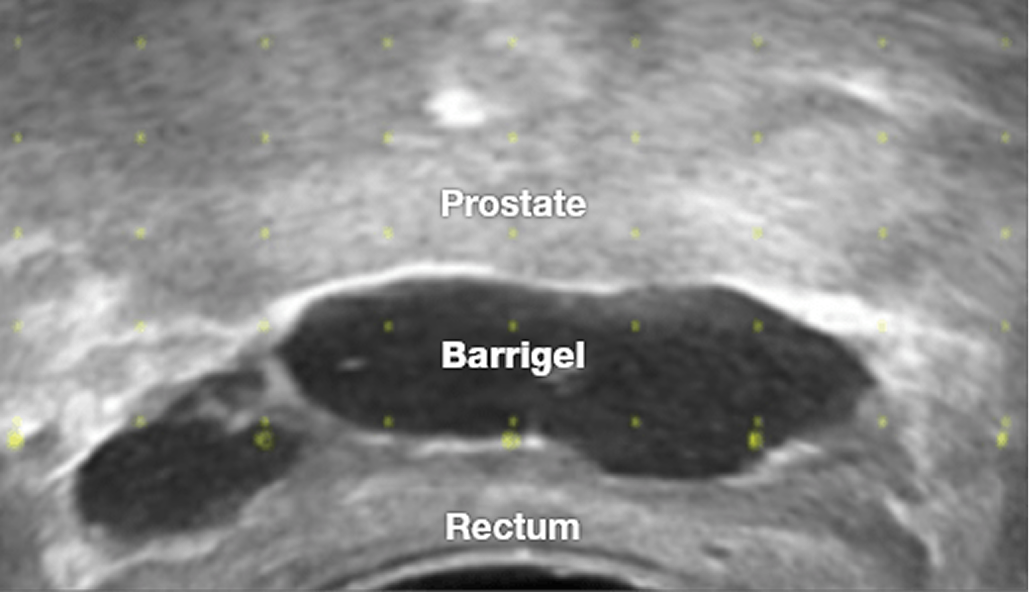
Barrigel™ rectal spacer is the only rectal spacer that can be tailored to your unique anatomy,1-5 protecting the rectum by moving it out of the high-dose radiation area.1 For patients like Michael, this meant greater confidence in their care plan and peace of mind during treatment.
Barrigel™ Rectal Spacer is Backed by Clinical Evidence1

Barrigel™ rectal spacer is clinically proven to significantly reduce unwanted rectal radiation exposure in 98.5% of patients.1
For Dr. Klaassen†, proven performance, ease of use1 and patient satisfaction are what makes Barrigel™ rectal spacer his spacer of choice.
What Patients and Physicians Are Saying
Michael and Jackie's Story
For Michael and his wife Jackie, choosing a treatment plan was about more than fighting cancer, it was about preserving Michael’s quality of life. After doing their research and meeting with Dr. Klaassen, they learned how Barrigel™ rectal spacer could help reduce the risk of bowel complications associated with radiation therapy.1
Reassured by Dr. Klaassen and confident in the proven safety of Barrigel™ rectal spacer,1 they chose a care plan that included radiation therapy with Barrigel™ rectal spacer. This decision gave Michael and Jackie peace of mind, knowing they were doing everything to protect his rectal health during treatment.

Dr. Klaassen's Perspective
As a urologic oncologist, Dr. Zachary Klaassen has seen firsthand how radiation therapy can affect the rectum, and how it impacts quality of life. That’s why he recommends Barrigel™ rectal spacer to his patients.
“Barrigel™ rectal spacer is the only spacer I recommend and use for my patients due to the safety profile, ease of use, the patient satisfaction, the data we have, I could go on and on. When I recommended it to Michael and Jackie, they decided on radiation plus Barrigel™ rectal spacer themselves.”

Zachary Klaassen, MD, MSc†
Urologic Oncologist at Georgia Cancer Center
Safety and Stability1
Barrigel™ rectal spacer is made from hyaluronic acid.6 Found naturally in the body, hyaluronic acid is fully biocompatible and absorbed after treatment is finished,7-8 as Dr. Klaassen notes.
The procedure is similar to your prostate biopsy and may be performed under local, regional, or general anesthesia—it can be performed in hospitals, outpatient clinics, or doctors' offices prior to the start of radiation treatment.
By creating space between the prostate and rectum, Barrigel™ rectal spacer helps reduce unwanted radiation exposure to reduce rectal side effects.1

Protect Rectal Health
Whether you’re a patient seeking peace of mind like Michael, or an experienced physician striving to improve patient experience like Dr. Klaassen, Barrigel™ rectal spacer offers a clinically proven solution.1
Control matters for improved symmetry.
BARRIGEL
Sculptable control over implant placement results in more symmetric coverage over the whole posterior rectal/prostate interface.
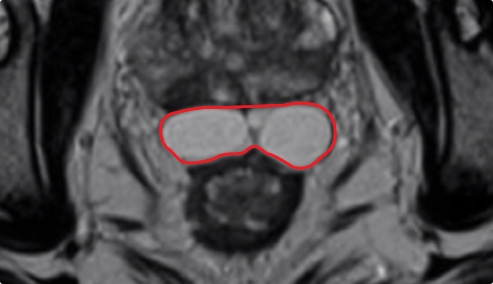
Implant Symmetry RESULTS6
>95%
Pivotal Trial Patients; % of implants centered on prostate midline
PEG HYDROGEL
Lack of control over placement of the implant can result uneven and inconsistent coverage.
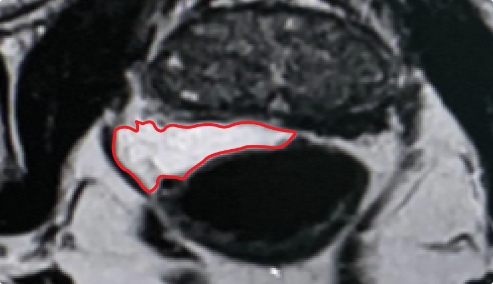
Implant Symmetry RESULTS7
49%
Pivotal Trial Patients; % of implants centered on prostate midline
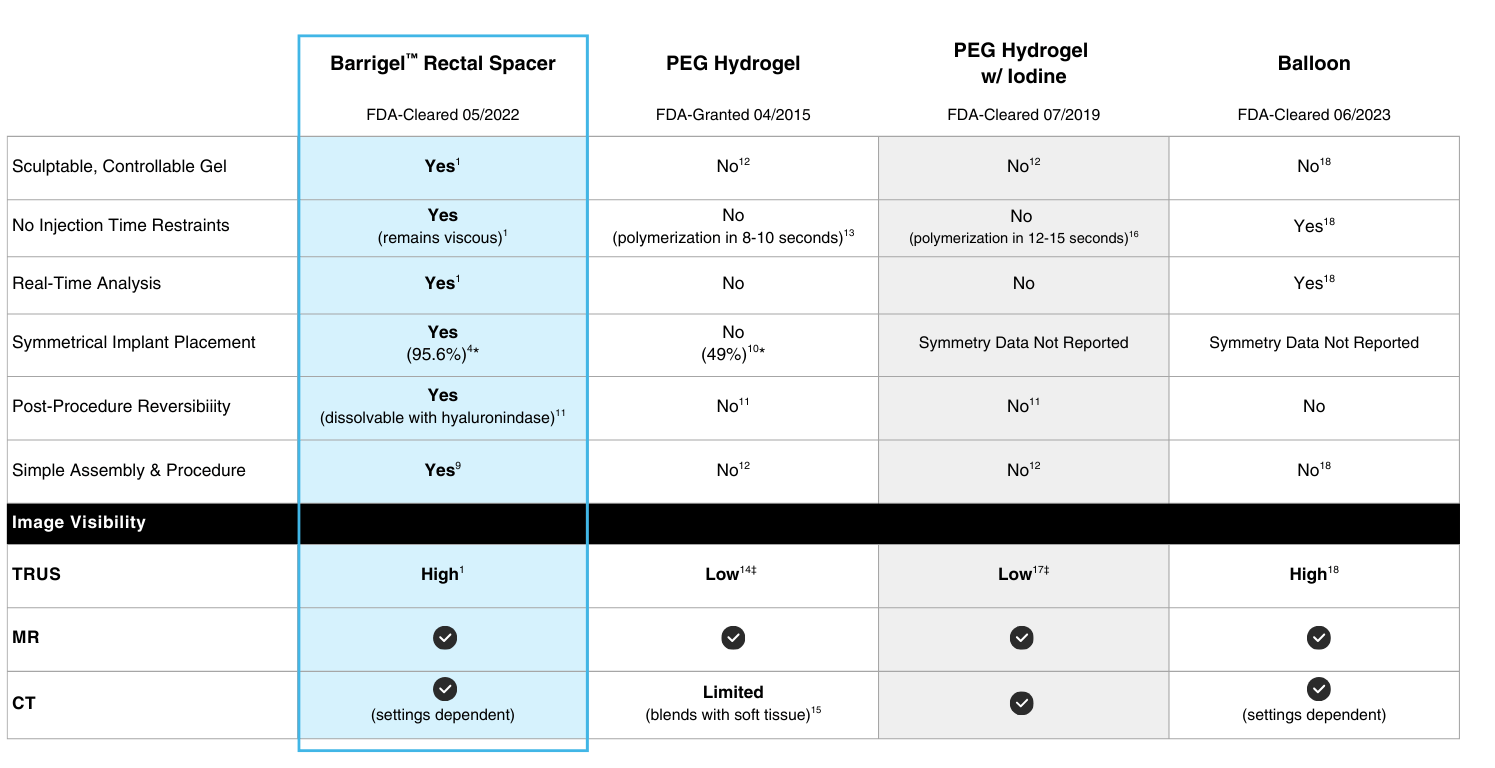
Rectal spacer properties.
Information provided for educational purposes only. No head-to-head study has been performed. Results from different clinical studies are not directly comparable.
Hear from Barrigel Physicians
“In my experience, Barrigel is safer due to the ability to control its location and alter its placement during the procedure. This allows us to have a MORE UNIFORM RESULT in tougher cases where another procedure could result in delay of care.”

Varun Sundaram, MD
Urologist at Urology Austin in Austin, TX, and Designated Barrigel Center of Excellence
“The ease-of-use injecting Barrigel allows the implanter to inject the spacer under no time constraint, and switch easily from sagittal to transverse ultrasound views for symmetrical, excellent coverage of the entire prostate gland. IT'S A NO BRAINER. ”

Zachary Klaassen, MD, MSc
Urologic Oncologist at Georgia Cancer Center
Barrigel™ rectal spacer is intended to temporarily position the anterior rectal wall away from the prostate during radiotherapy for prostate cancer and, in creating this space, it is the intent of Barrigel™ rectal spacer to reduce the radiation dose delivered to the anterior rectum. Barrigel™ rectal spacer is composed of biodegradable material and maintains space for the entire course of prostate radiotherapy treatment and is intended to be absorbed by the patient’s body over time. Barrigel™ rectal spacer should only be administered by qualified and properly trained physicians with experience in ultrasound guidance and injection techniques in the urogenital/pelvic area. As with any medical treatment, there are some risks involved with the use of Barrigel™ rectal spacer. Potential complications associated with the use of Barrigel™ rectal spacer include, but are not limited to: pain associated with Barrigel™ rectal spacer injection; needle penetration of the bladder, prostate, rectal wall, rectum, or urethra; injection of Barrigel™ rectal spacer into the bladder, prostate, rectal wall, rectum, urethra, or intravascularly; local inflammatory reactions; infection; urinary retention; rectal mucosal damage, ulcers, necrosis; bleeding; constipation; and rectal urgency. More information on indications, contraindications, warnings and instructions for use can be found in the Instructions For Use at www.barrigel.com. Individual results may vary.
Caution: Federal (USA) law restricts this device to sale by or on the order of a physician.
1. Mariados NF, Orio PF III, King MT et al. JAMA Oncol (2023).*†
2. Svatos M, Chell E, Low DA et al. Med Phys (2024).*
3. Williams J, Mc Millan K, Chao M et al. J Med Imag Radiat Sci (2022).
4. Gejerman G, Goldstein MM, Chao M et al. Pract Radiat Oncol (2023).*†
5. Data on file. As of 04/04/2025
6. Barrigel Injectable Gel Instructions for Use (2022).
7. Restylane® celebrates 25 years of natural-looking results with its signature line of hyaluronic acid fillers. 2021.
8. Svatos M, Chell E, Low DA et al. Med Phys (2024).*
*Study sponsored by Palette Life Sciences, now part of Teleflex.
† Drs Klaassen, Gejerman, Chao, Lederer, and Orio are paid consultants of Teleflex.
Barrigel, and the Barrigel logo are trademarks or registered trademarks of Teleflex Incorporated or its affiliates, in the U.S. and/or other countries.

©2025 Teleflex Incorporated. All rights reserved. APM1255A